Welcome: Hubei Kaili Special Automobile Co., Ltd.
Language:
∷


Asphalt sprayer trucks are essential equipment for road construction, pavement maintenance, and waterproofing projects. At first glance, all asphalt sprayers perform the same basic function - heating bitumen and spraying it onto a surface. But the technology inside these trucks varies significantly, and the difference between a basic manual model and a modern intelligent system can mean a 30% variation in material waste, application quality, and project completion time.
This article compares two fundamental technology choices in asphalt sprayer trucks: spray control systems (intelligent vs. manual) and heating methods (thermal oil vs. direct flame), explaining how each works and which application suits each type best.
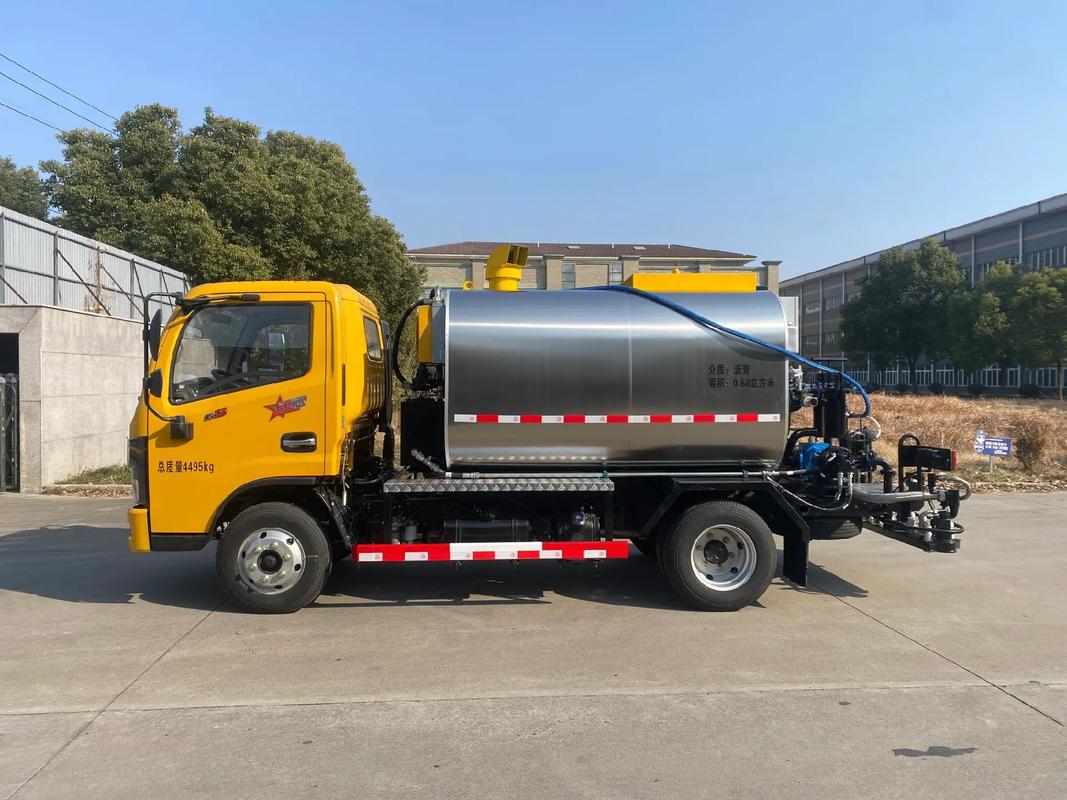
All asphalt sprayer trucks follow the same four-stage operational cycle, regardless of technology level:
Heating - Bitumen must be heated to its application temperature (typically 150-180 deg C depending on the bitumen grade). The truck's heating system raises the material temperature and maintains it throughout the work shift.
Loading - Heated bitumen is transferred from storage tanks or melting stations into the truck's insulated tank. Some models have self-loading capability through built-in pumps.
Transport and temperature maintenance - During transit to the job site, the heating system keeps bitumen at the correct viscosity. Temperature drop of more than 10-15 deg C can cause poor adhesion and require reheating.
Spraying - The operator controls spray nozzles at the rear of the truck to apply bitumen at a controlled rate and width onto the road surface.
Manual systems rely entirely on the operator's skill. The operator sits at a rear control panel, observes the spray pattern visually, and adjusts valve positions, pump speed, and nozzle angles by hand.
How it works: A mechanical gearbox-driven pump pushes bitumen through a spray bar with 15-30 nozzles. Nozzle height and angle are adjusted manually. Spray width is controlled by opening or closing individual nozzle valves. Application rate is estimated based on pump speed and truck speed.
Advantages: Lower initial cost (20-35% cheaper than intelligent), simpler maintenance, repairable by local mechanics without specialized diagnostic equipment.
Disadvantages: Heavy dependence on operator experience - a novice can waste 10-15% of material. Inconsistent application across speed variations. Difficult to achieve precise application rates (kg/m2) consistently. No data recording for quality documentation.
Intelligent systems use electronic sensors, microcontrollers, and automated valves to maintain precise application rates regardless of truck speed changes.
How it works: A radar or GPS-based ground speed sensor measures actual truck speed in real time. A control computer calculates the required pump flow rate to maintain the target application rate (e.g., 1.5 kg/m2). Electronically controlled valves on each nozzle section open and close automatically. A touchscreen interface allows the operator to preset parameters before spraying begins.
Advantages: Material savings of 8-12% through precise rate control. Consistent quality regardless of operator skill. Real-time data logging for quality documentation. Automatic compensation for speed changes.
Disadvantages: Higher purchase cost. Requires trained technicians for electronic diagnostics. Sensor calibration needed periodically.
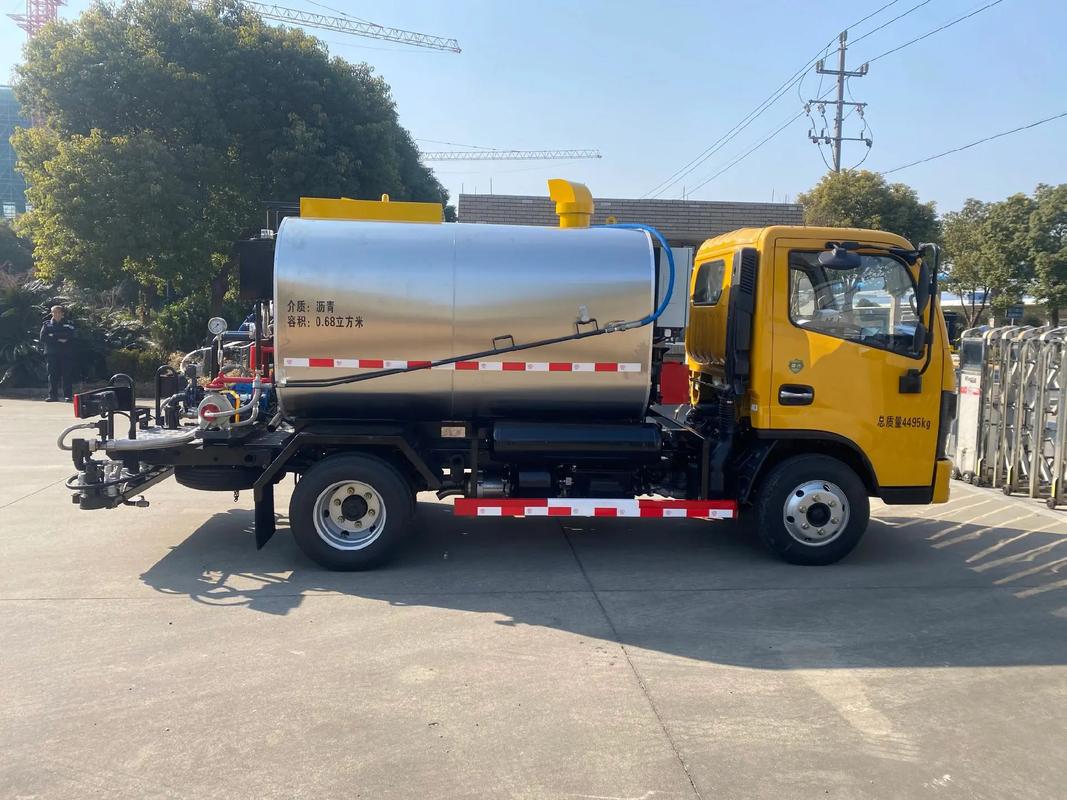
| Feature | Manual Control | Intelligent Control |
|---|---|---|
| Application accuracy | +/- 10-15% | +/- 2-5% |
| Operator dependence | High | Low |
| Material waste risk | 10-15% | 2-5% |
| System cost | Lower (baseline) | Higher (+20-35%) |
| Maintenance complexity | Low | Moderate |
| Data logging | None | Full record |
| Best suited for | Small projects, budget-limited | Highway projects, certified contractors |
Direct flame heating is the traditional method, where a diesel burner directly heats the bottom or sides of the bitumen tank.
How it works: A diesel burner mounted under the tank fires directly against the tank wall. Heat transfers through the tank shell to the bitumen. A basic thermostat controls the burner on/off cycle. A flue pipe runs through the tank to improve heat distribution.
Advantages: Simple design with fewer components. Lower manufacturing cost. Faster initial heating (30-45 minutes to 160 deg C). Easy to repair with common parts.
Disadvantages: Uneven heat distribution - bitumen near the tank wall gets hotter than center material. Hot spots cause bitumen aging and coking (carbon deposits). Lower thermal efficiency. Temperature control is less precise (+/- 10-15 deg C).
Thermal oil systems use a separate closed loop of heat transfer oil to provide indirect, even heating.
How it works: A diesel burner heats a closed loop of thermal oil in a separate heat exchanger. A circulation pump moves the hot oil through a jacket or tube system surrounding the bitumen tank. The oil transfers heat evenly to the tank wall. An expansion tank accommodates thermal expansion.
Advantages: Even heat distribution across the entire tank surface. Better temperature control (+/- 3-5 deg C). Reduced bitumen aging and coking. Higher thermal efficiency (15-20% better). Can maintain temperature longer after burner shutdown.
Disadvantages: Higher initial cost. Slower initial heat-up (45-70 minutes to 160 deg C). Thermal oil must be changed every 2-3 years. More complex troubleshooting.
| Feature | Direct Flame | Thermal Oil |
|---|---|---|
| Heat-up time (to 160 deg C) | 30-45 min | 45-70 min |
| Temperature accuracy | +/- 10-15 deg C | +/- 3-5 deg C |
| Thermal efficiency | Lower | Higher (15-20% better) |
| Heat distribution | Uneven | Even |
| Bitumen coking risk | Higher | Lower |
| System complexity | Low | Moderate |
| Maintenance cost | Lower | Moderate |
| Best suited for | Intermittent use, warm climate | Continuous operation, cold climate |
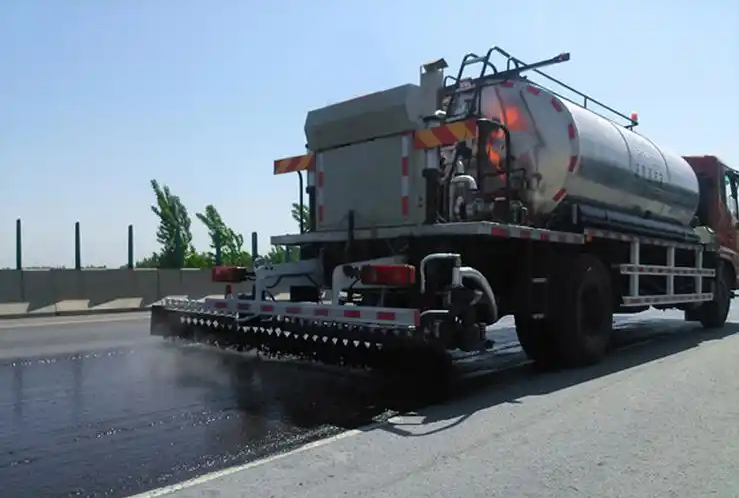
The best combination depends on your project type, climate, and budget:
| Combination | Best For | Key Benefit |
|---|---|---|
| Manual spray + Direct flame | Small contractors, warm climate, patch repairs | Lowest cost |
| Intelligent spray + Direct flame | Medium contractors, moderate climate | Best cost-benefit ratio |
| Manual spray + Thermal oil | Cold-climate municipal fleets | Temperature precision on budget |
| Intelligent spray + Thermal oil | Highway projects, premium contractors | Full quality and efficiency |
Modern intelligent spray systems eliminate the dependency on operator skill and provide consistent, data-verified application quality. Thermal oil heating extends equipment life and improves temperature precision for demanding projects.
For most professional contractors, the intelligent spray system delivers the fastest return on investment through material savings alone. The choice between direct flame and thermal oil depends on local climate and typical project duration. Hot climate operators with short daily projects can rely on direct flame. Those in cooler regions or on continuous long-duration projects benefit from the thermal oil system's temperature stability.
Need help selecting the right asphalt sprayer truck configuration? Contact Kailion Group with your typical project type, climate conditions, and quality requirements. We can recommend an optimized configuration for your operations.
Contact: Meredith Luo
Phone: 8615792041643
Tel: 8615792041643
Email: kailiongroup@gmail.com
Add: Room 609, Yuanchuang International, Nanchang, Jiangxi, China