Welcome: Hubei Kaili Special Automobile Co., Ltd.
Language:
∷


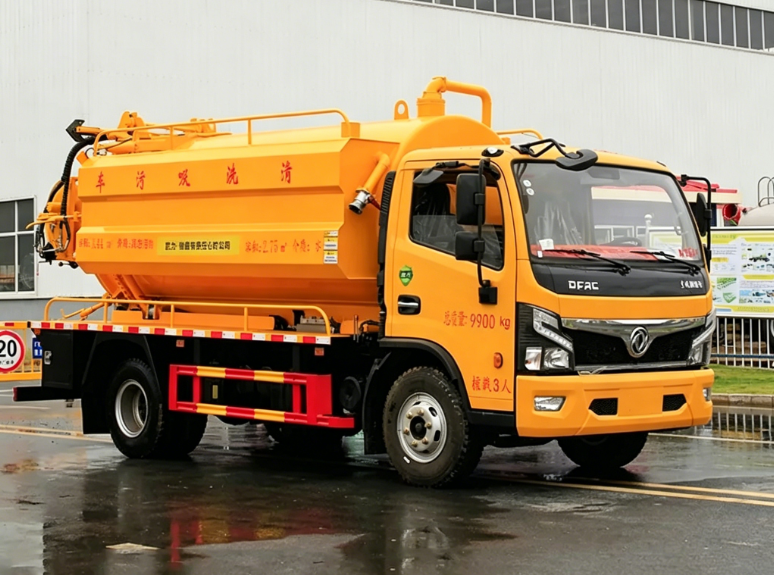
Sewage suction trucks - also known as vacuum tankers or gully suckers - are among the most versatile vehicles in the special-purpose fleet. While their name suggests a single function, these machines handle a surprisingly wide range of liquid waste operations: from routine septic tank maintenance to high-stakes industrial chemical transfers. Understanding where and how sewage suction trucks are deployed helps fleet managers, municipal planners, and procurement officers make informed purchasing decisions.
This article examines four core application scenarios in depth - municipal sewage networks, industrial liquid waste, oilfield operations, and emergency response - with real-world case examples and practical selection guidance for each.
Cities across the Gulf and beyond operate vast underground sewage networks. Dubai alone manages over 3,000 kilometers of sewer lines. Blockages from debris, grease accumulation, and sediment buildup require regular intervention - and when a main line backs up, the consequences ripple across entire districts.
Municipal crews deploy vacuum tankers for three primary tasks:
Routine septic tank and grease trap cleaning - Scheduled extraction prevents overflow and maintains system capacity
Pipeline blockage clearance - High-vacuum suction removes obstructions without excavation
Manhole and wet well maintenance - Removing accumulated sludge before it enters treatment facilities
| Requirement | Why It Matters |
|---|---|
| Suction depth >= 15m | Deep manholes and underground tanks are common in Gulf cities |
| Tank capacity 8,000L-12,000L | Balances maneuverability in urban streets with operational range |
| Odor control system | Essential for residential area operation - look for sealed tank design |
| Quiet operation package | Nighttime maintenance in urban zones requires noise-reduced pumps |
In 2024, a municipal authority managing sanitation for 1.2 million residents replaced its aging fleet of 15 vacuum trucks. The procurement team prioritized:
GCC certification and SABER registration for compliance
10,000L tanks to maximize collection per trip while navigating narrow residential streets
Desert-adapted cooling for summer reliability
After deploying the new fleet, the authority reported:
40% reduction in repeat callouts for the same blockage sites
Average response time dropped from 4.2 hours to 2.1 hours
Vehicle downtime decreased by 60% during peak summer months compared to the previous fleet
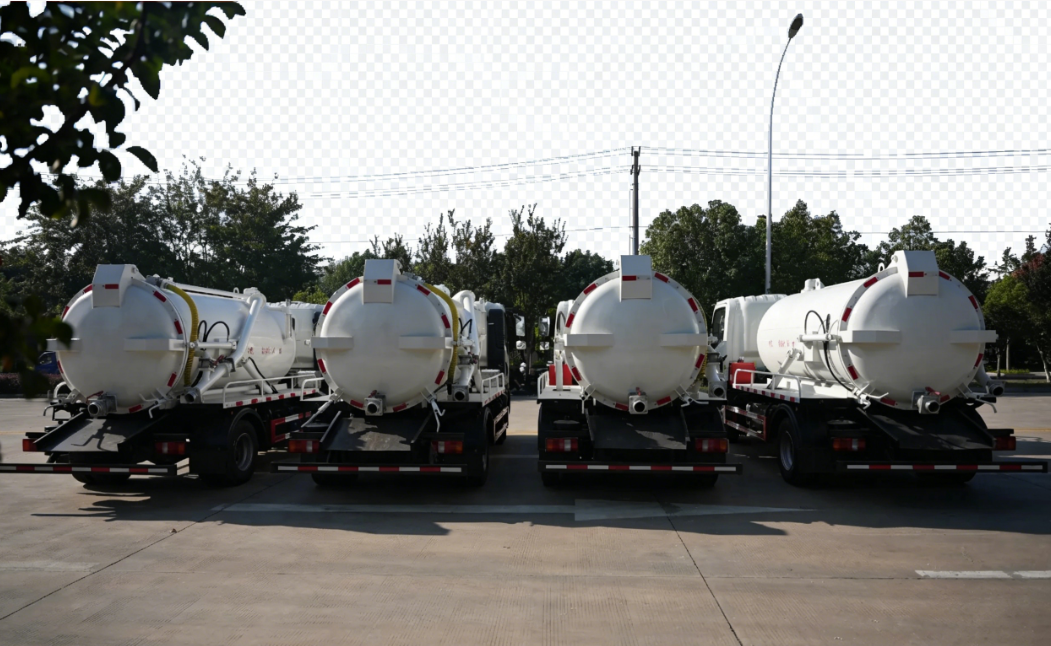
Manufacturing facilities, petrochemical refineries, food processing plants, and chemical factories generate liquid waste streams that standard sewage trucks cannot handle. These wastes may be corrosive, high-temperature, viscous, or contain suspended solids - each presenting unique transport and disposal challenges.
Chemical plant waste transfer - Moving spent acids, alkalis, and process water to treatment facilities
Refinery sludge removal - Extracting heavy oil sludge from settling tanks and separators
Food processing waste - Collecting organic liquid waste from slaughterhouses, dairies, and beverage plants
Manufacturing coolant and cutting fluid recovery - Vacuuming spent industrial fluids for recycling or disposal
| Requirement | Why It Matters |
|---|---|
| Corrosion-resistant tank lining | Epoxy or stainless steel to withstand acidic/alkaline waste |
| Explosion-proof pump options | ATEX-rated for petrochemical environments |
| High-temperature seals and hoses | Handles waste streams up to 90 deg C from industrial processes |
| Tank capacity 15,000L-20,000L | Reduces trips for high-volume industrial sites |
A petrochemical plant in Jubail - Saudi Arabia's largest industrial zone - needed a dedicated liquid waste transport solution. The plant generates approximately 80,000 liters of process wastewater daily, mixed with trace hydrocarbons and chemical residues.
The solution deployed included:
Three SV-15000 units with reinforced epoxy-lined carbon steel tanks
Explosion-proof vacuum pumps rated for Zone 2 hazardous areas
Heated tank option for high-viscosity sludge during winter months
Key outcomes after 12 months of operation:
Zero corrosion-related tank failures - the multi-layer epoxy coating held up against acidic waste with pH as low as 3.5
On-site vacuum time reduced from 45 minutes to 28 minutes per tank fill, attributed to the 1,200m3/h pump flow rate
Annual maintenance costs 35% lower than previously contracted third-party waste transport
Oil and gas extraction produces substantial liquid waste: drilling mud, produced water, fracturing fluids, and crude oil sludge. Remote well sites often lack permanent pipeline infrastructure, making mobile vacuum tankers the only practical transport method. Harsh desert conditions and the hazardous nature of the cargo add layers of complexity.
Drilling mud collection and transport - Removing spent drilling fluids from well sites
Produced water handling - Transporting saline water that surfaces during oil extraction
Crude oil sludge recovery - Vacuuming settled sludge from storage tanks and separators
Flowback water management - Collecting water returned after hydraulic fracturing operations
Spill response - Rapid deployment to contain and recover accidental hydrocarbon releases
| Requirement | Why It Matters |
|---|---|
| Explosion-proof electrical systems | Mandatory for hydrocarbon vapor environments |
| High-flow vacuum pumps (>=1,600m3/h) | Oilfield sludge is dense and slow-moving |
| Heated tank and pump system | Prevents crude and paraffin solidification |
| All-terrain chassis (6x4 or 8x4) | Remote well sites often lack paved access roads |
| Spill containment tray | Secondary containment prevents ground contamination |
A Kuwaiti oilfield operator required vacuum tankers for daily produced water transport across a 120km2 concession area. The produced water contained 3-5% residual crude oil and salt concentrations exceeding 200,000 ppm - highly corrosive to standard steel tanks.
Deployed solution:
Five SV-20000 units (20,000L) with 1,600m3/h water-ring vacuum pumps
Stainless steel tank interiors to resist prolonged saltwater exposure
Onboard steam heating system to maintain flowability during winter nights
GPS tracking and automated load monitoring integrated with the operator's SCADA system
Results over 18 months:
99.2% operational availability across summer and winter extremes
Average daily transport volume: 380,000 liters across five units
Tank corrosion inspection at 12 months showed no measurable wall thinning
Driver acceptance rating: 4.7/5 for cab comfort and control ergonomics during 10-hour shifts
When floods strike, sewage systems back up, or industrial spills occur, the speed of response determines the scale of damage. Emergency services need vehicles that can deploy within minutes, operate reliably under stress, and handle unpredictable waste compositions — from clean floodwater to raw sewage mixed with debris.
Flash flood water extraction - Removing standing water from underpasses, basements, and low-lying urban areas
Sanitation emergency response - Clearing sewage overflows that threaten public health
Industrial spill containment - Rapid vacuuming of chemical or fuel spills to prevent groundwater contamination
Post-disaster sanitation - Restoring basic sanitation in areas hit by earthquakes, floods, or conflict
Mass gathering support - Temporary waste collection for Hajj, World Cup, Expo, and other large events
| Requirement | Why It Matters |
|---|---|
| Fast vacuum pump priming | Every minute counts in emergency scenarios |
| Large debris handling capability | Flood water contains mud, stones, and organic matter |
| Multi-liquid compatibility | Same truck may handle sewage, flood water, and light chemicals |
| 24/7 service support | Breakdown during an emergency is unacceptable |
| Compact turning radius | Navigating disaster-affected streets with obstacles |
In April 2024, unprecedented rainfall caused widespread flooding across Sharjah's industrial areas. Underground parking structures filled with 2+ meters of water mixed with fuel residue, sewage, and debris. Municipal emergency services deployed a mixed fleet of vacuum tankers for a 72-hour continuous operation.
The response fleet included:
Four SV-10000 units for narrow-access areas and underground car parks
Two SV-20000 units as mobile buffer tanks, enabling smaller units to discharge on-site without traveling to disposal points
All units pre-fitted with debris screens and wide-bore suction hoses
Results from the 72-hour operation:
Estimated 1.8 million liters of contaminated water extracted
Zero pump blockages - debris screens captured 340kg of solid waste
Average 23 minutes from arrival to first suction - enabled by rapid-prime pump configuration
Municipal authority extended fleet order by 12 additional units following the response
| Scenario | Recommended Model | Tank Capacity | Critical Feature | Operating Environment |
|---|---|---|---|---|
| Municipal sewage | SV-10000 | 10,000L | Odor control + quiet pump | Urban streets, residential |
| Industrial waste | SV-15000 | 15,000L | Chemical-resistant lining | Factories, refineries |
| Oilfield operations | SV-20000 | 20,000L | Explosion-proof + heated tank | Remote desert sites |
| Emergency response | SV-10000 / SV-20000 | 10,000-20,000L | Rapid prime + debris handling | Disaster zones, urban |
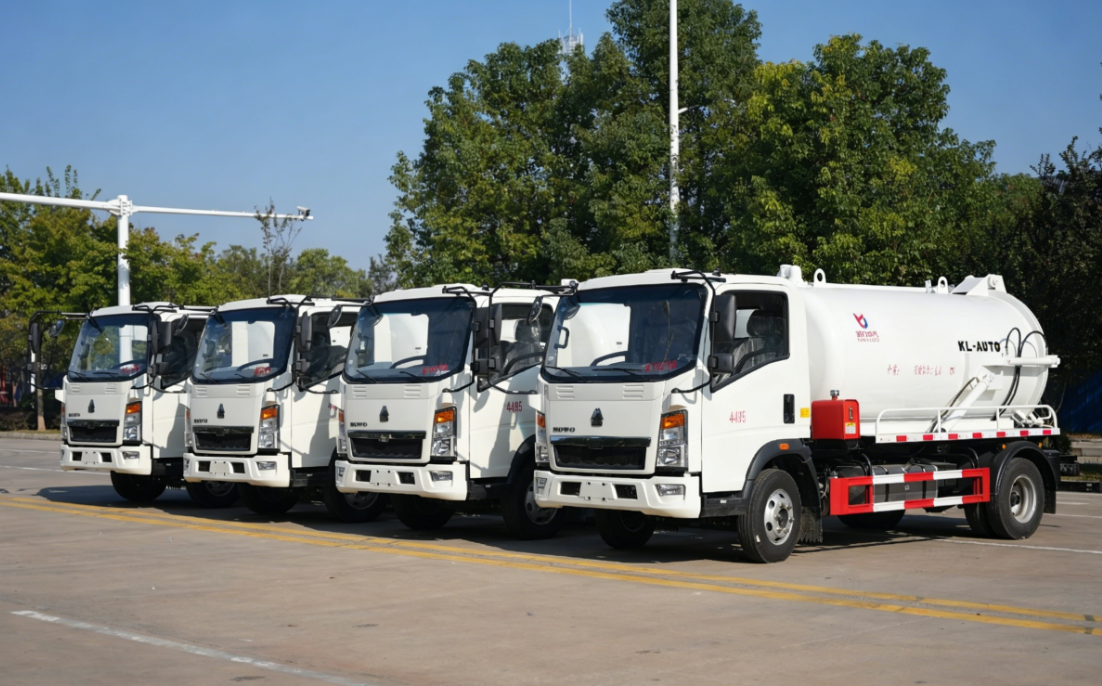
| Waste Category | Tank Material | Pump Type | Special Requirements |
|---|---|---|---|
| Domestic sewage | Carbon steel + epoxy | Rotary vane | Odor control system |
| Industrial chemicals | Stainless steel or multi-layer epoxy | Water-ring | Corrosion certificate |
| Oilfield sludge | Stainless steel + heating | High-flow water-ring | ATEX certification |
| Mixed emergency | Carbon steel + debris-resistant lining | Fast-prime rotary vane | Multi-liquid compatibility |
A simple rule of thumb:
Tank Capacity (L) = Average daily transport distance (km) x Collection volume per stop (L) / Number of round trips per day
For municipal fleets, 8,000L-12,000L typically balances efficiency with urban maneuverability. For industrial and oilfield operations, 15,000L-20,000L reduces per-liter transport costs over longer distances.
Saudi Arabia: GCC Certificate of Conformity + SABER registration
UAE: GCC certification + ESMA compliance
Kuwait: KUCAS conformity assessment
Qatar: QS certification for imported vehicles
Before purchase, confirm:
Nearest authorized service center to your operating base
Spare parts availability for vacuum pumps, seals, and filtration elements
Response time guarantee for emergency breakdowns
Operator training program inclusion
Sewage suction trucks are not one-size-fits-all machines. The same basic platform - a vacuum pump, a tank, and a chassis - transforms into fundamentally different tools depending on application:
A municipal unit prioritizes quiet operation, odor control, and urban maneuverability
An industrial unit demands chemical resistance and safety certifications
An oilfield unit requires explosion-proofing, heating, and all-terrain capability
An emergency unit needs speed, versatility, and absolute reliability
Matching the truck configuration to the application - before purchase - is the single most important factor in fleet performance, operational cost, and vehicle longevity.
Need help selecting the right sewage suction truck for your operation? Contact our engineering team with your waste type, daily volume, and operating environment - we will recommend a tailored configuration with full GCC certification documentation.
Kailion Group specializes in GCC-certified sewage suction trucks for municipal, industrial, and oilfield applications across the Middle East. Contact us via WhatsApp or email for a same-day consultation.
Contact: Meredith Luo
Phone: 8615792041643
Tel: 8615792041643
Email: kailiongroup@gmail.com
Add: Room 609, Yuanchuang International, Nanchang, Jiangxi, China